
Choosing a crawl space dehumidifier is not just a matter of buying the largest unit you can afford. Square footage is a useful starting point, but moisture conditions, drainage, airflow and the layout of the crawl space also affect which capacity makes sense.
Start With Square Footage — Then Adjust for Moisture
The simplest way to begin is to measure the approximate square footage of the crawl space and compare it with the manufacturer’s stated coverage. But coverage alone should not make the final decision.
A practical rule: start with a model rated for your crawl space size, then consider moving to a higher-capacity unit when the space has persistent high humidity, damp soil, water intrusion, poor air circulation or other significant moisture loads.
Measure the Space
Estimate crawl space length × width to determine the approximate square footage.
Evaluate Moisture
Look beyond area. Consider humidity, damp surfaces, standing water and seasonal moisture.
Check Drainage
Decide whether gravity drainage is practical or whether a built-in pump would make installation easier.
Crawl Space Dehumidifier Size Chart
The ranges below are a practical starting framework rather than a universal sizing formula. Actual manufacturer ratings and site conditions should always be checked before buying.
| Approx. Crawl Space | Moisture Condition | What to Look For | Example Direction |
|---|---|---|---|
| Up to about 1,000 sq. ft. | Light to moderate moisture | Compact footprint and continuous drainage | Smaller crawl-space unit |
| About 1,000–1,300 sq. ft. | Moderate moisture | More moisture-removal capacity | Mid-size unit |
| About 1,300–1,800 sq. ft. | Moderate to heavier moisture | Higher capacity and strong continuous drainage | Larger-capacity unit |
| Large or high-moisture spaces | Heavy or persistent moisture | Higher capacity, drainage flexibility and adequate airflow | High-capacity unit |
Light to moderate moisture
Look for a compact unit with continuous drainage.
Moderate moisture
Compare mid-size units with additional moisture-removal capacity.
Moderate to heavier moisture
Consider higher-capacity units with reliable continuous drainage.
Heavy or persistent moisture
Compare higher-capacity models while also considering drainage and airflow.
How to Calculate Your Crawl Space Size
For a roughly rectangular crawl space, multiply its length by its width. For example, a 40-foot by 25-foot crawl space is approximately 1,000 square feet.
If the foundation has several sections, estimate each section separately and add them together. You do not need a perfect architectural measurement to create a useful starting estimate.
Why Moisture Conditions Matter More Than Square Footage Alone
A coverage rating is useful, but the actual moisture load determines how hard the dehumidifier needs to work. A relatively dry encapsulated crawl space can present a very different load from an equally sized space with damp ground or water intrusion.
Not sure whether your crawl space is actually too humid? Read our crawl space humidity level guide to learn how to interpret relative humidity, monitor moisture conditions and recognize when persistent high humidity needs attention.
Humidity Level
Persistent high relative humidity means the machine may need to run longer and remove more water to maintain the desired conditions.
Damp Soil or Surfaces
Exposed soil, damp masonry and wet structural materials can continually introduce moisture into the crawl space.
Water Intrusion
Plumbing leaks, seepage or standing water should be addressed at the source rather than relying on a dehumidifier as the only solution.
Air Leakage
Outside air entering the crawl space can increase the moisture load, particularly during warm and humid weather.
What Does PPD Mean on a Dehumidifier?
Dehumidifier capacity is commonly expressed in pints per day (PPD). This describes moisture-removal capacity under specified test conditions.
When comparing crawl space models, pay attention to the test basis behind the number. Product listings may show capacity under saturated conditions, AHAM conditions, or both. Numbers based on different test conditions should not be treated as directly interchangeable.
Four Crawl Space Dehumidifier Sizes to Compare
These four models illustrate how you can move from a smaller crawl space unit toward higher-capacity options. Always verify current specifications, coverage and pricing with the merchant before purchasing.
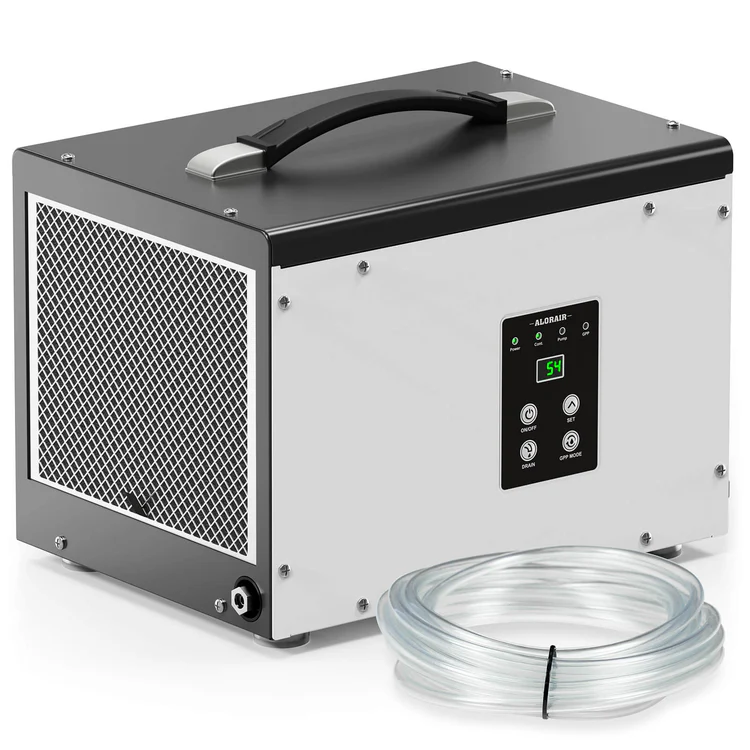
Sentinel HD35P
- Coverage: up to 1,000 sq. ft.
- 70 PPD saturation / 35 PPD AHAM
- Built-in condensate pump
- Compact starting point for smaller crawl spaces
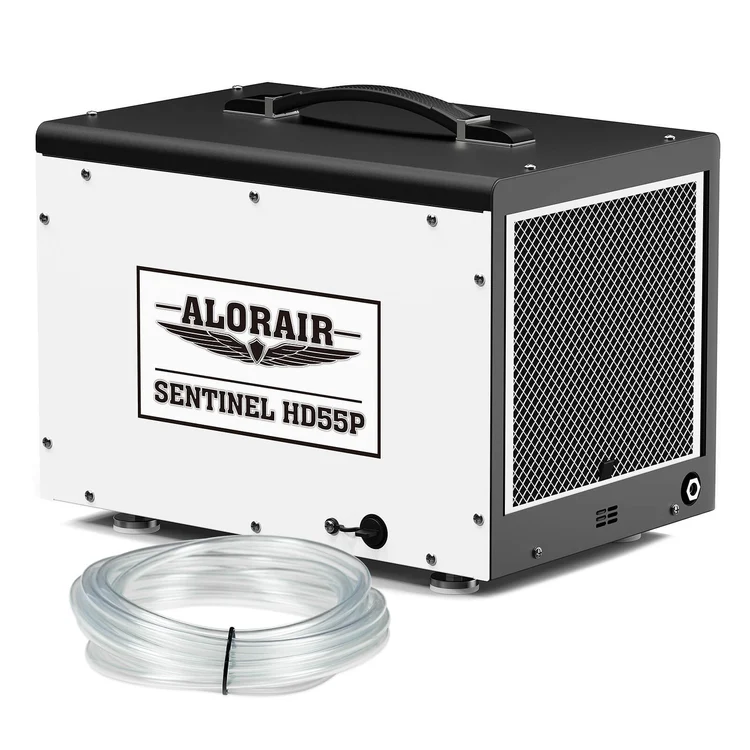
Sentinel HD55P
- Coverage: up to 1,300 sq. ft.
- 120 PPD saturation / 55 PPD AHAM
- Built-in condensate pump
- A step up for many mid-size crawl spaces
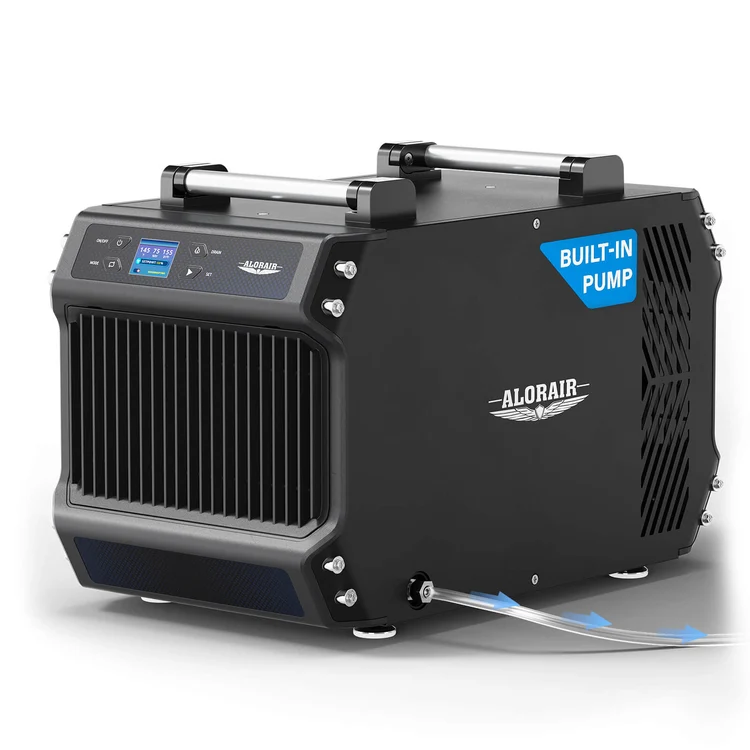
Galaxy 60P
- Coverage: up to 1,800 sq. ft.
- 145 PPD saturation / 60 PPD AHAM
- Built-in condensate pump
- Higher-capacity option for larger crawl spaces
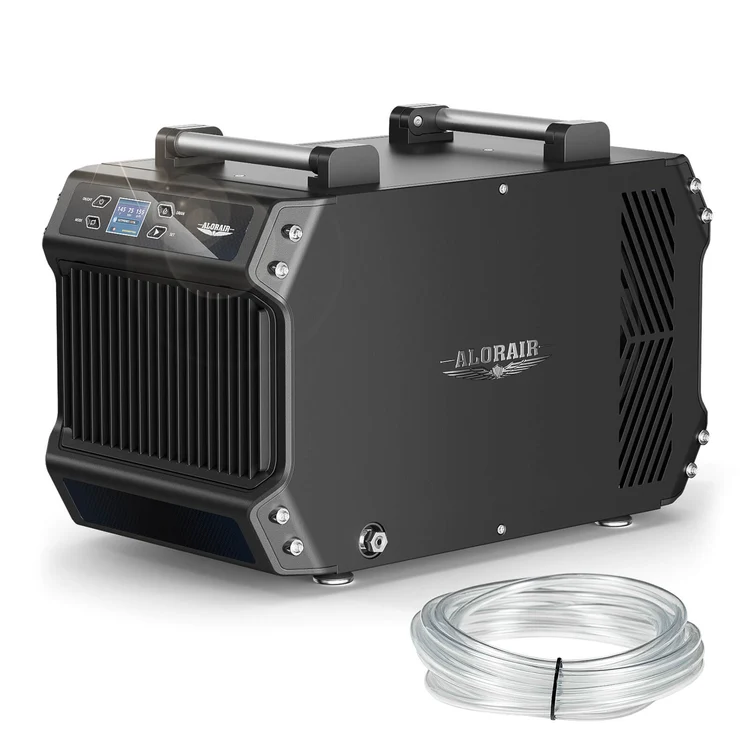
Galaxy 85P
- Coverage: up to 2,300 sq. ft.
- 180 PPD saturation / 85 PPD AHAM
- Built-in condensate pump
- Higher-capacity option for large crawl spaces
Should You Just Buy the Largest Dehumidifier?
Not necessarily. More capacity can provide useful headroom when moisture conditions are demanding, but the largest machine is not automatically the best choice for every crawl space.
Physical dimensions, airflow, drainage, installation location, operating conditions and manufacturer recommendations all matter. A properly selected unit should fit both the moisture load and the installation.
- Check whether the unit physically fits the intended location.
- Leave appropriate clearance for airflow and maintenance.
- Confirm how condensate will be drained.
- Compare capacity ratings under the same test conditions.
- Consider the severity of the moisture problem, not just floor area.
Do You Need a Built-In Pump?
Drainage is easy to overlook when sizing a dehumidifier. If a suitable drain is below the unit, gravity drainage may be straightforward. When condensate needs to travel upward or to a less convenient discharge point, a pump can simplify the installation.
If you are deciding between gravity drainage and pump drainage, read our built-in pump crawl space dehumidifier guide for a closer look at when a built-in condensate pump is worth it.
Gravity Drainage
Can be simple and reliable when there is a suitable downhill route for the drain hose.
Built-In Pump
Can be useful when the drainage route requires condensate to be moved to a higher or more distant discharge point.
Six Questions to Answer Before Choosing a Size
- How large is the crawl space? Measure the approximate square footage.
- How severe is the moisture? Consider humidity, damp materials and water intrusion.
- Where will the condensate go? Decide whether gravity drainage or a pump makes sense.
- Is there enough clearance? Check installation and service space.
- What capacity standard is being quoted? Compare like-for-like ratings whenever possible.
- Is there an underlying water problem? Repair leaks and address water entry rather than expecting the dehumidifier to solve the source.
Crawl Space Dehumidifier Sizing Questions
What size dehumidifier do I need for a 1,000 sq. ft. crawl space?
What size dehumidifier do I need for a 1,500 sq. ft. crawl space?
Can a crawl space dehumidifier be too large?
Is square footage enough to choose a dehumidifier?
Should I choose a crawl space dehumidifier with a pump?
Compare Crawl Space Dehumidifiers Side by Side
Once you know the approximate size of your crawl space and the severity of the moisture problem, compare coverage, moisture-removal capacity, drainage and intended use before choosing a model.
Compare the 4 Models