
A good food processor can take repetitive prep work out of chopping vegetables, slicing potatoes, shredding cheese, mixing sauces, and handling other everyday kitchen tasks. The best model for you depends less on having the longest feature list and more on bowl capacity, blade and disc options, feed-tube design, controls, cleaning, storage, and the foods you prepare most often.
This guide compares full-size food processors for different households and prep styles. Mini choppers are covered separately in our Best Mini Food Processors guide.
Our Top Food Processor Picks
| Pick | Best For | Why It Stands Out |
|---|---|---|
| Cuisinart Custom 14-Cup Food Processor | Best Overall | Large work bowl, straightforward controls, and a classic full-size design. |
| Breville Sous Chef 16 | Best Premium | Large capacity and a broad accessory set for more demanding prep. |
| KitchenAid 13-Cup Food Processor | Best for Adjustable Slicing | Useful capacity with slicing and shredding versatility. |
| Ninja PrecisionPro Food Processor and Dough Mixer | Best for Power and Dough | High-output design with chopping and dough-oriented functions. |
| Cuisinart 7-Cup Food Processor (FP-7) | Best Value | Compact full-size capacity with core slicing, shredding, and chopping functions. |
| Cuisinart 9-Cup Continuous Feed Food Processor | Best for Smaller Households | More compact capacity with useful everyday processing functions. |
Best Food Processors
1. Cuisinart Custom 14-Cup Food Processor — Best Overall
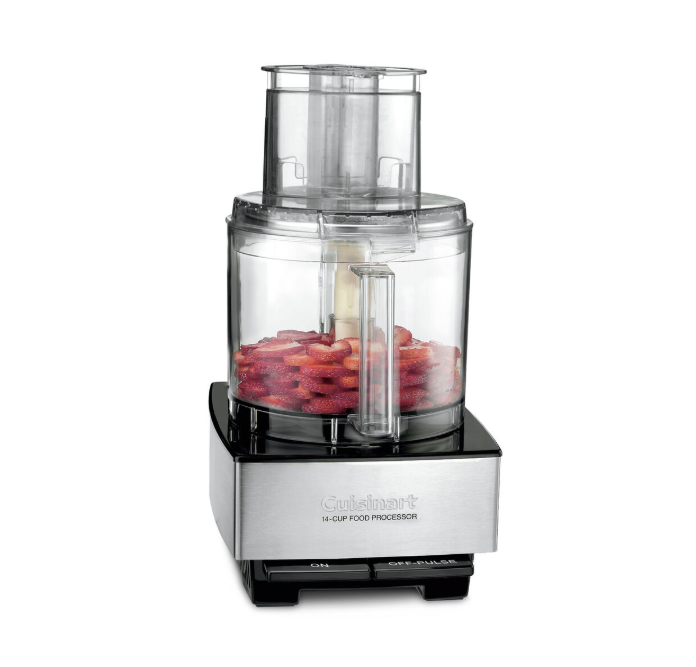
The Cuisinart Custom 14-Cup is a straightforward full-size processor for households that want substantial capacity without an overly complicated control panel. Its large work bowl is useful for chopping vegetables, preparing sauces, and handling larger batches.
Its appeal is simplicity: rather than relying on many automated programs, it focuses on core food-processing tasks with a chopping blade and disc-based slicing and shredding.
Best for: Buyers who want a proven, large-capacity general-purpose food processor.
Consider: A 14-cup machine takes more cabinet and counter space than compact models.
Check Price →2. Breville Sous Chef 16 — Best Premium
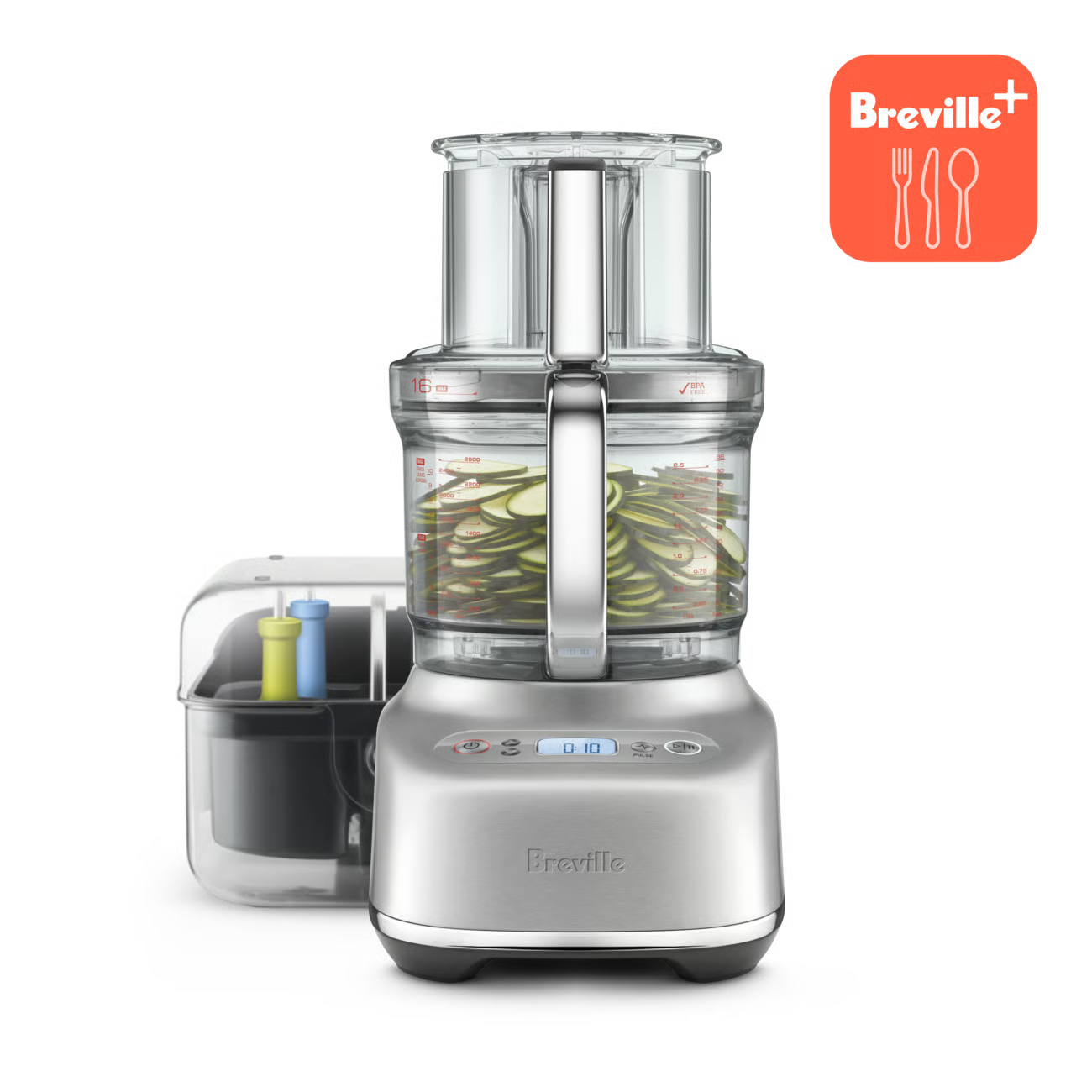
The Breville Sous Chef 16 is aimed at cooks who want a larger work bowl and a more extensive processing setup. It is better suited to frequent prep and households that expect to use slicing, shredding, chopping, and other processor functions regularly.
The trade-off is size and complexity. A premium processor with more accessories requires more storage than a basic model.
Best for: Frequent cooks who want capacity and accessory versatility.
Consider: It is more machine than occasional users may need.
Check Price →3. KitchenAid 13-Cup Food Processor — Best for Adjustable Slicing
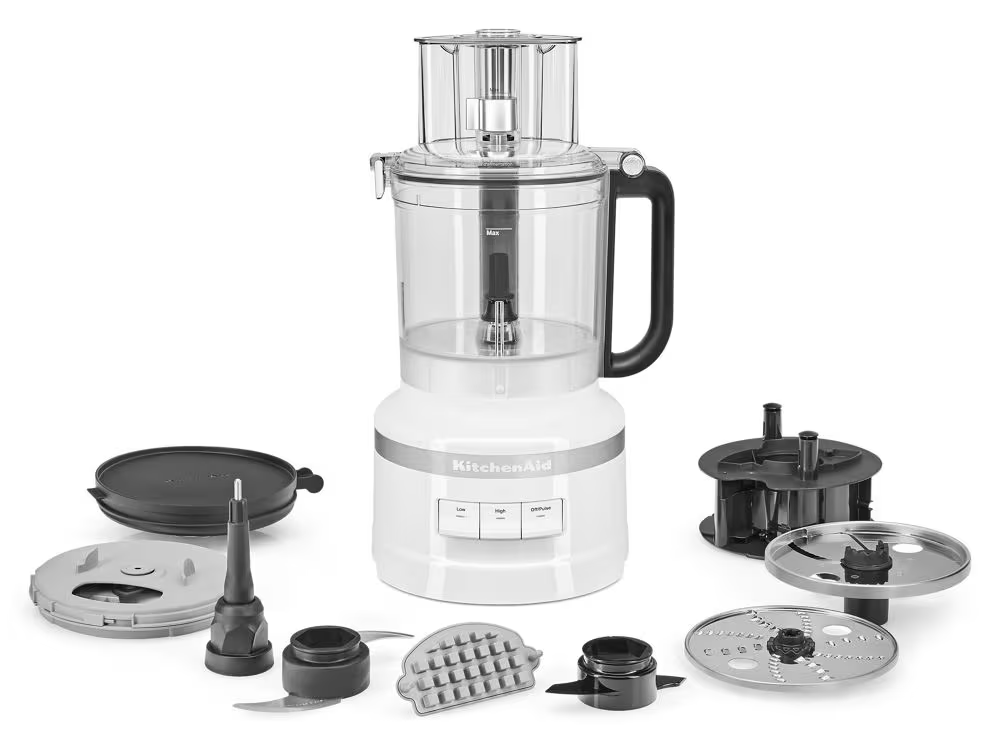
A 13-cup KitchenAid processor sits in a useful range for family-size prep while still being somewhat easier to manage than the largest machines. It is a strong fit for users who regularly slice and shred vegetables in addition to basic chopping.
If disc-based prep is important to you, pay close attention to the exact included accessories because bundles can vary by model and retailer.
Best for: Slicing, shredding, and general family meal preparation.
Consider: Confirm the exact model and included disc set before buying.
Check Price →4. Ninja PrecisionPro Food Processor and Dough Mixer — Best for Power and Dough
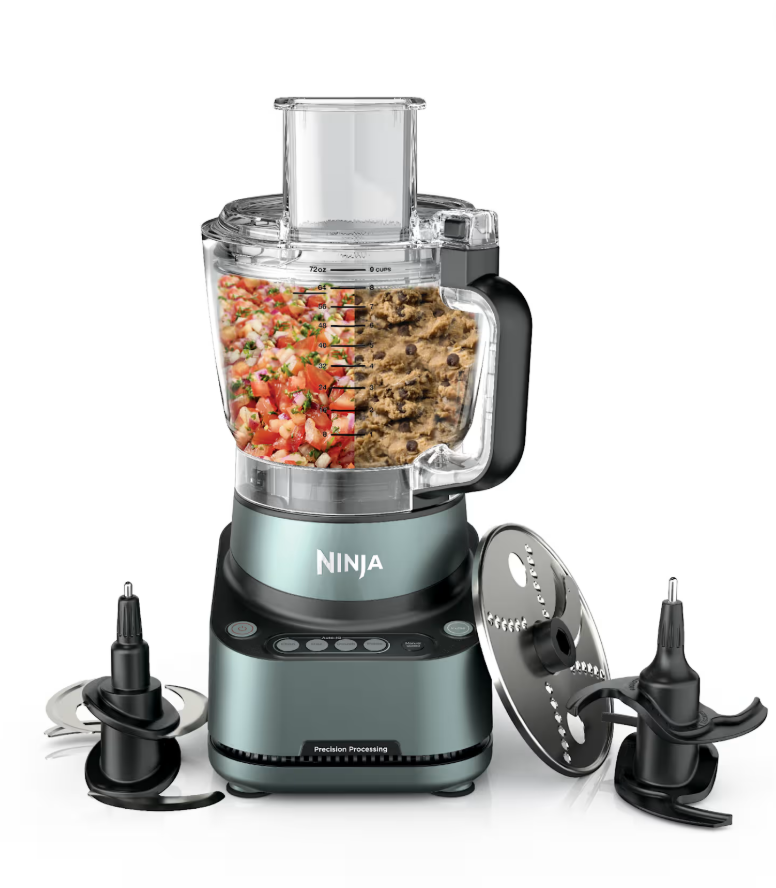
The Ninja PrecisionPro BZ601 is designed for chopping, shredding, pureeing, and dough mixing in a 9-cup format. It is a strong fit for buyers who want a current Ninja food processor with versatile everyday prep functions.
As with any processor used for dough, follow the manufacturer’s batch-size and processing guidance rather than filling the bowl to its maximum liquid or dry capacity.
Best for: Buyers prioritizing motor power, chopping, and occasional dough.
Consider: Capacity and accessory design may matter more than raw wattage for some users.
Check Price →5. Cuisinart 7-Cup Food Processor (FP-7) — Best Value
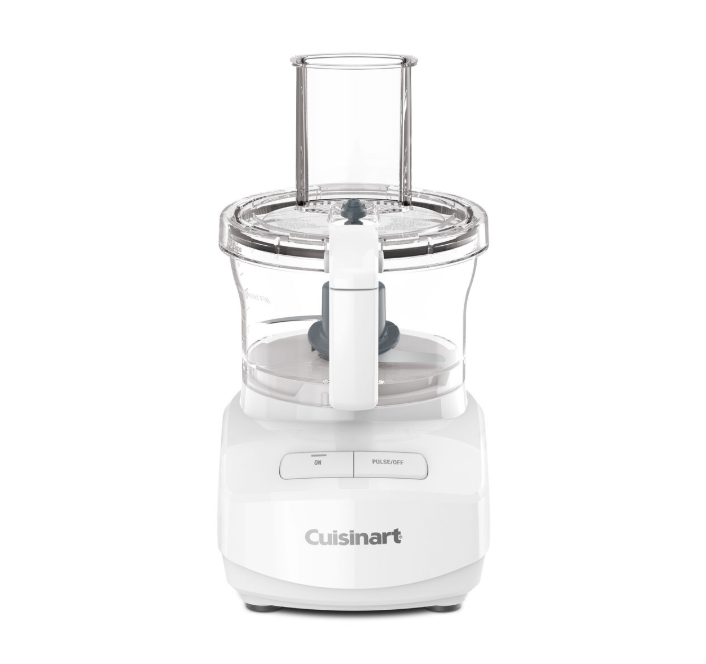
The Cuisinart FP-7 is a more compact full-size option for households that want chopping, slicing, and shredding capability without the footprint of a 12- to 16-cup machine.
It makes the most sense for smaller households and kitchens where storage space matters but a mini chopper would be too limited.
Best for: Smaller households that want a practical full-size processor.
Consider: The 7-cup capacity may require batching for larger family-size recipes.
Check Price →6. Cuisinart 9-Cup Continuous Feed Food Processor — Best for Smaller Households
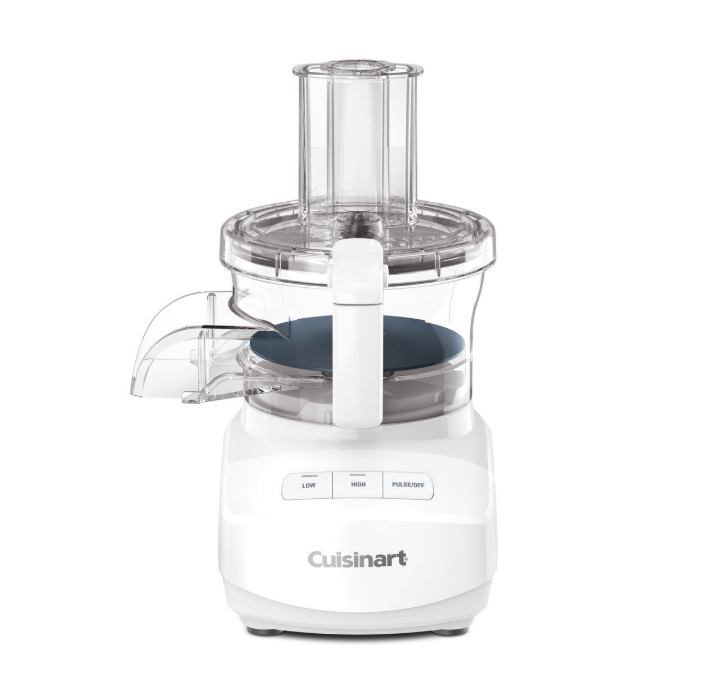
A 9-cup processor can be easier to store and clean than a 12- to 16-cup model while still providing enough capacity for many everyday chopping, slicing, and shredding jobs.
This size is especially useful for couples, smaller households, and kitchens where cabinet space matters.
Best for: Everyday prep without the footprint of a very large processor.
Consider: Large recipes may need to be processed in batches.
Check Price →How We Compare Food Processors
We compare food processors around the features that materially affect everyday prep rather than treating a longer specification list as automatically better. Important factors include:
- Work-bowl capacity
- Chopping and pureeing capability
- Slicing and shredding disc options
- Feed-tube size and design
- Dough capability where applicable
- Control layout and ease of assembly
- Cleaning requirements
- Accessory and cord storage
- Countertop and cabinet footprint
- Overall usefulness for the intended household
What Size Food Processor Do You Need?
Capacity is one of the most important buying decisions. A smaller bowl is easier to store and may be sufficient for sauces, herbs, onions, and small batches. A larger processor gives you more room for family-size vegetable prep, shredding, slicing, and larger recipes.
For a deeper breakdown of mini, medium, and full-size machines, see our Food Processor Size Guide.
Food Processor vs Blender
A food processor and blender overlap in some tasks, but their shapes and blade systems are optimized differently. Food processors are generally more useful for chopping, slicing, shredding, and many dough or prep tasks, while blenders are typically better suited to smoothies and other liquid-heavy mixtures.
See our full Food Processor vs Blender comparison before deciding whether you need one appliance or both.
Full-Size vs Mini Food Processor
A mini processor is useful for small amounts of herbs, nuts, onions, sauces, dressings, and other quick jobs. Full-size processors add capacity and are more likely to include slicing and shredding discs and larger feed tubes.
If most of your prep is small-batch work, see our Best Mini Food Processors guide.
What to Look for When Buying a Food Processor
Bowl Capacity
Choose capacity around your normal batch size. Oversizing can mean more storage and cleaning, while undersizing can force you to process food in multiple batches.
Blades and Discs
A standard chopping blade handles many core tasks. Slicing and shredding discs add much more versatility for vegetables, cheese, and similar ingredients.
Feed Tube
A wider feed tube can reduce how much you need to pre-cut potatoes, cucumbers, carrots, and other ingredients before slicing or shredding.
Controls
Simple on, off, and pulse controls are enough for many users. More elaborate presets can be convenient, but they are not automatically necessary for good food preparation.
Cleaning
Consider how easily the bowl, lid, blade, discs, and feed-tube components come apart. Always follow the manufacturer’s instructions before putting components in a dishwasher.
Storage
Large bowls and accessory collections require cabinet space. If your kitchen is small, storage can be just as important as motor power.
Frequently Asked Questions
What is the best size food processor for most people?
There is no single ideal capacity for everyone, but medium and full-size processors are generally more versatile for households that want chopping plus slicing and shredding. Smaller households may prefer a more compact bowl.
Can a food processor make dough?
Many full-size processors can mix certain doughs when equipped with an appropriate blade and used within the manufacturer’s batch limits. Check the specific model instructions before processing heavy dough.
Can a food processor replace a blender?
Not completely. A food processor can puree and mix many foods, but a blender’s tall jar and blade system is generally better suited to smoothies and liquid-heavy blending.
Is a larger food processor always better?
No. Larger machines provide more batch capacity but also require more storage space and can be less convenient for very small quantities.
Do I need slicing and shredding discs?
If you regularly prepare vegetables, cheese, potatoes, slaws, or similar foods, discs can add substantial value. If you mainly chop onions, herbs, and sauces, you may use them less often.
Final Thoughts
The best food processor is the one that matches your normal batch size and the prep jobs you actually perform. Large premium machines make sense for frequent cooks, while simpler 9- to 12-cup models can cover most everyday chopping, slicing, and shredding without taking over the kitchen.
Start with capacity, then compare the included blades and discs, feed tube, cleaning, storage, and controls. Those factors usually matter more in daily use than choosing a machine solely by motor wattage.