
The best espresso machine depends on how much control you want over the brewing process. Some machines are designed for beginners who want guided dosing and automatic milk frothing, while others give experienced home baristas more direct control over grinding, tamping, extraction, and steaming.
This guide compares current home espresso machines across several styles, including assisted semi-automatic machines, compact manual machines, traditional enthusiast models, and fully automatic systems. We focus on ease of use, grinder integration, milk frothing, temperature control, maintenance, counter space, and value for different types of users.
Best Espresso Machines at a Glance
| Product | Best For | Machine Type | Grinder | Milk System |
|---|---|---|---|---|
| De’Longhi La Specialista Touch (EC9455M) | Best Overall | Assisted semi-automatic | Built-in, 15 settings | Automatic + manual milk frothing |
| Breville Bambino Plus (BES500) | Best Compact | Semi-automatic | Separate grinder required | Automatic steam wand |
| Ninja Luxe Café Premier Series (ES601) | Best for Beginners | Assisted multi-function | Built-in, 25 settings | Hands-free Dual Froth System |
| Breville Barista Express Impress (BES876) | Best Assisted Manual | Assisted semi-automatic | Built-in, 25 settings | Manual steam wand |
| Gaggia Classic Pro E24 | Best for Enthusiasts | Traditional semi-automatic | Separate grinder required | Commercial-style steam wand |
| Philips Series 3300 LatteGo (EP3347/90) | Best Fully Automatic | Super-automatic | Built-in | LatteGo automatic milk system |
Our Top Espresso Machine Picks
De’Longhi La Specialista Touch (EC9455M)
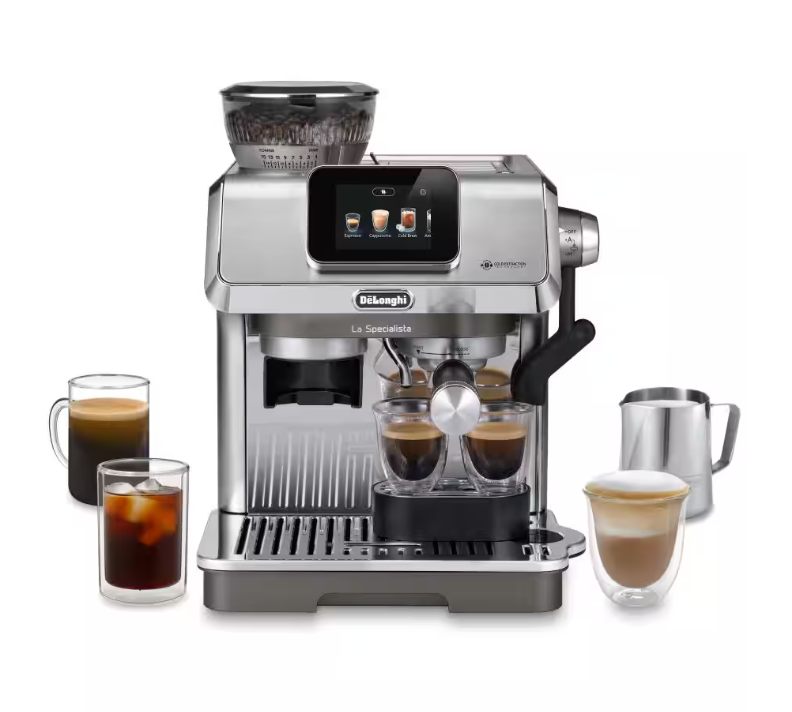
The La Specialista Touch combines an integrated grinder, guided setup, touchscreen controls, automatic milk frothing, and enough manual control to keep the process interactive. It is designed for users who want a hands-on espresso experience without having to learn every variable from scratch.
- 15 grind settings
- 3.5-inch color touchscreen
- 10 preset drink recipes
- Automatic milk frothing with multiple texture and temperature settings
- PID-supported temperature control and guided Bean Adapt settings
- Cold brew and hot coffee drink options
It balances convenience and control better than many all-in-one machines. Beginners get visual guidance, while more experienced users can still adjust grind, dose, temperature, milk texture, and drink profiles.
It is a large and relatively expensive machine. Buyers who already own a high-quality grinder or who prefer a simpler workflow may not need its integrated grinder and touchscreen system.
Breville Bambino Plus (BES500)
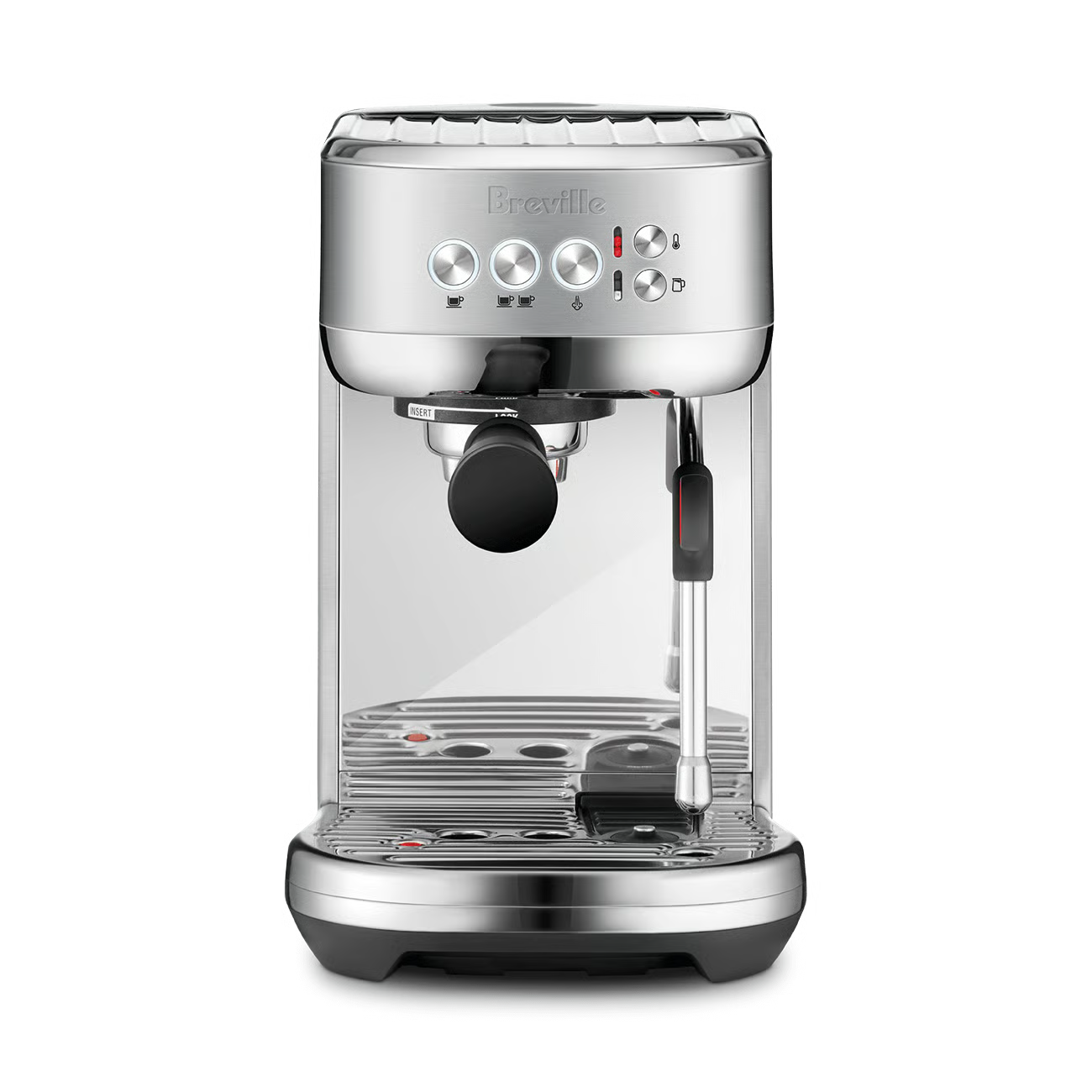
The Bambino Plus is designed for small kitchens and users who want a compact semi-automatic machine without giving up automatic milk texturing. It uses a 54mm portafilter and provides one-touch single and double shot controls.
- Compact footprint
- 54mm stainless steel portafilter
- Preset single- and double-shot controls
- Automatic milk texturing
- Three milk-temperature settings
- Three milk-foam settings
- 64 oz removable water tank
It gives small kitchens a practical route into real espresso without requiring a large all-in-one machine. Automatic milk texturing also reduces one of the more difficult parts of learning lattes and cappuccinos.
There is no built-in grinder, so a capable espresso grinder is still required. Users who want everything integrated into one appliance may prefer an assisted all-in-one model.
Ninja Luxe Café Premier Series (ES601)
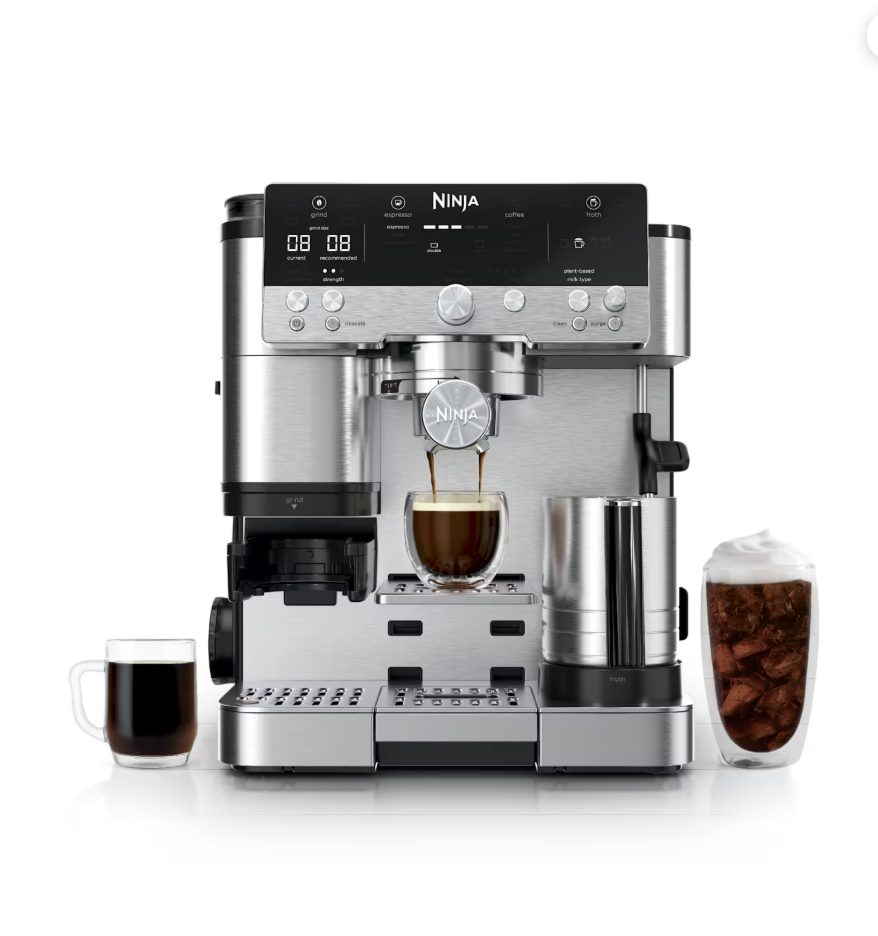
The Ninja Luxe Café Premier Series (ES601) is built around reducing guesswork. It combines espresso, drip coffee, and cold brew functions with an integrated grinder, built-in scale, automatic brew adjustments, and hands-free milk frothing.
- Espresso, drip coffee, and cold brew in one machine
- Integrated conical burr grinder with 25 settings
- Weight-based dosing with built-in scale
- Barista Assist Technology for grind and brew guidance
- Automatic brew-temperature and timing adjustments
- Hands-free hot or cold microfoam
It is one of the easiest ways for a beginner to move from basic coffee appliances into espresso because much of the dosing, grinding, and frothing process is guided or automated.
Its 3-in-1 design takes up more counter space than a compact espresso machine, and enthusiasts who want complete manual control may find its assisted workflow less appealing.
Breville Barista Express Impress (BES876)
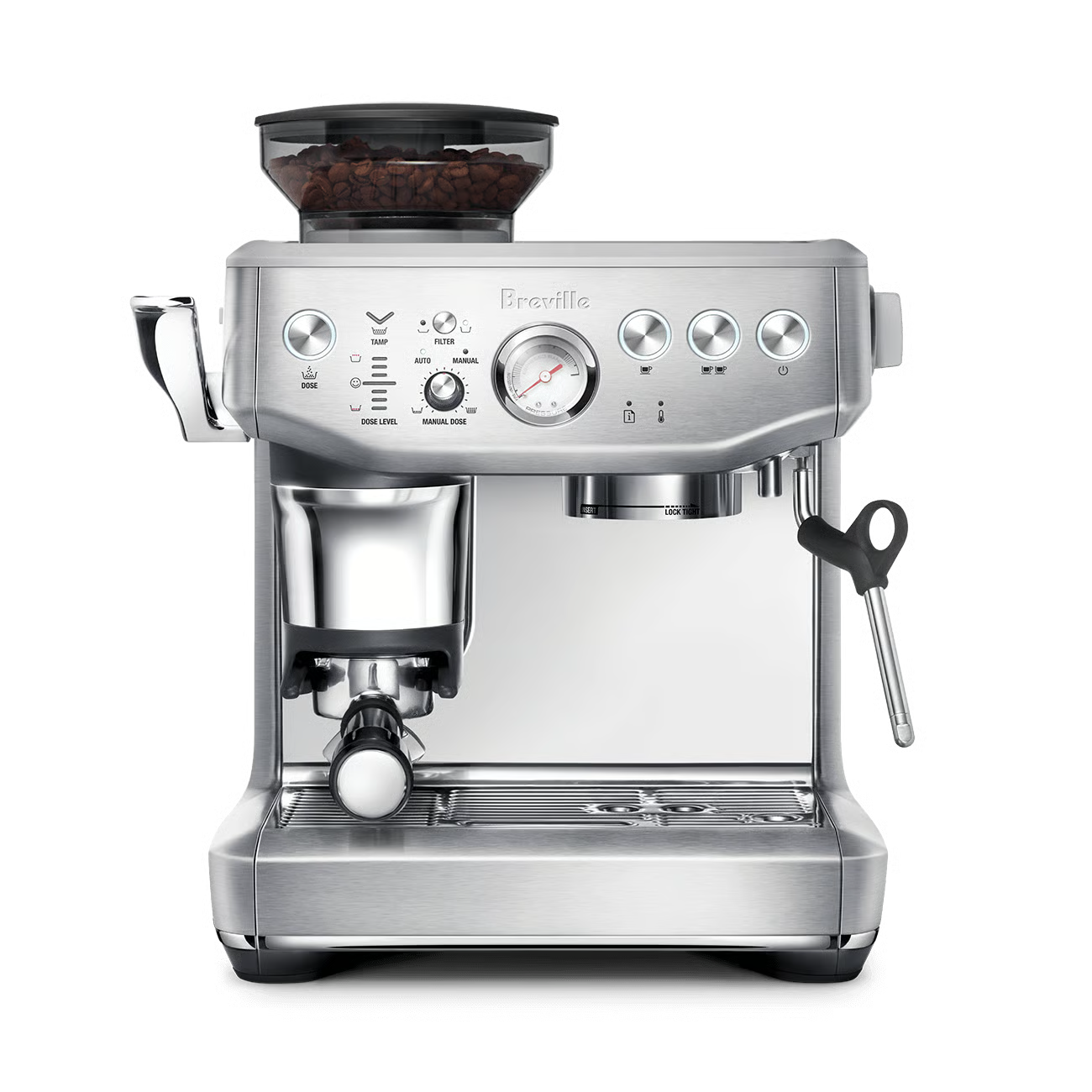
The Barista Express Impress keeps the familiar semi-automatic workflow but reduces dosing and tamping mistakes. Its integrated grinder, intelligent dosing system, assisted tamping, pressure gauge, and manual steam wand make it a useful middle ground between beginner-friendly automation and traditional espresso preparation.
- Integrated steel conical burr grinder
- 25 precision grind settings
- Intelligent dosing with automatic correction
- Assisted tamping with dose feedback
- 54mm portafilter
- PID temperature control
- Manual milk texturing
It helps users learn espresso fundamentals while removing two common pain points: inconsistent dosing and uneven tamping. That makes it easier to build repeatable habits without moving to full automation.
Milk steaming is still manual, and the machine is significantly larger than compact espresso makers. Buyers who want true one-touch drinks may prefer a super-automatic machine.
Gaggia Classic Pro E24
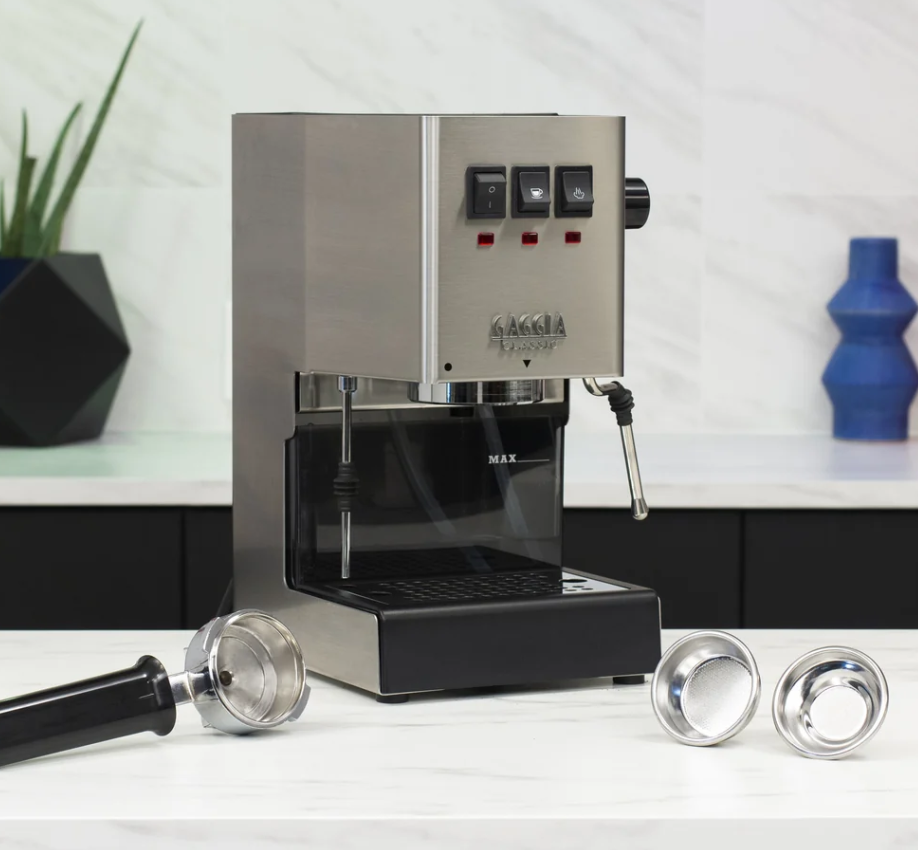
The Gaggia Classic Pro E24 is a more traditional semi-automatic machine designed for users who want direct control over their grinder, dose, extraction, and milk steaming. The E24 version adds a lead-free brass boiler and retains a commercial-style 58mm portafilter and steam wand.
- Lead-free brass boiler
- 58mm stainless steel portafilter
- 9-bar brew-pressure calibration
- Commercial-style two-hole steam wand
- 72 oz water reservoir
- Mechanical rocker-switch controls
- Made in Italy
Its traditional design rewards users who want to learn espresso technique and pair the machine with a dedicated grinder. The 58mm format and commercial-style hardware also make it appealing to enthusiasts who prefer fewer automated systems.
It has a steeper learning curve and no integrated grinder. Consistent results depend heavily on grind quality, dosing, distribution, tamping, and temperature-management habits.
Philips Series 3300 LatteGo (EP3347/90)
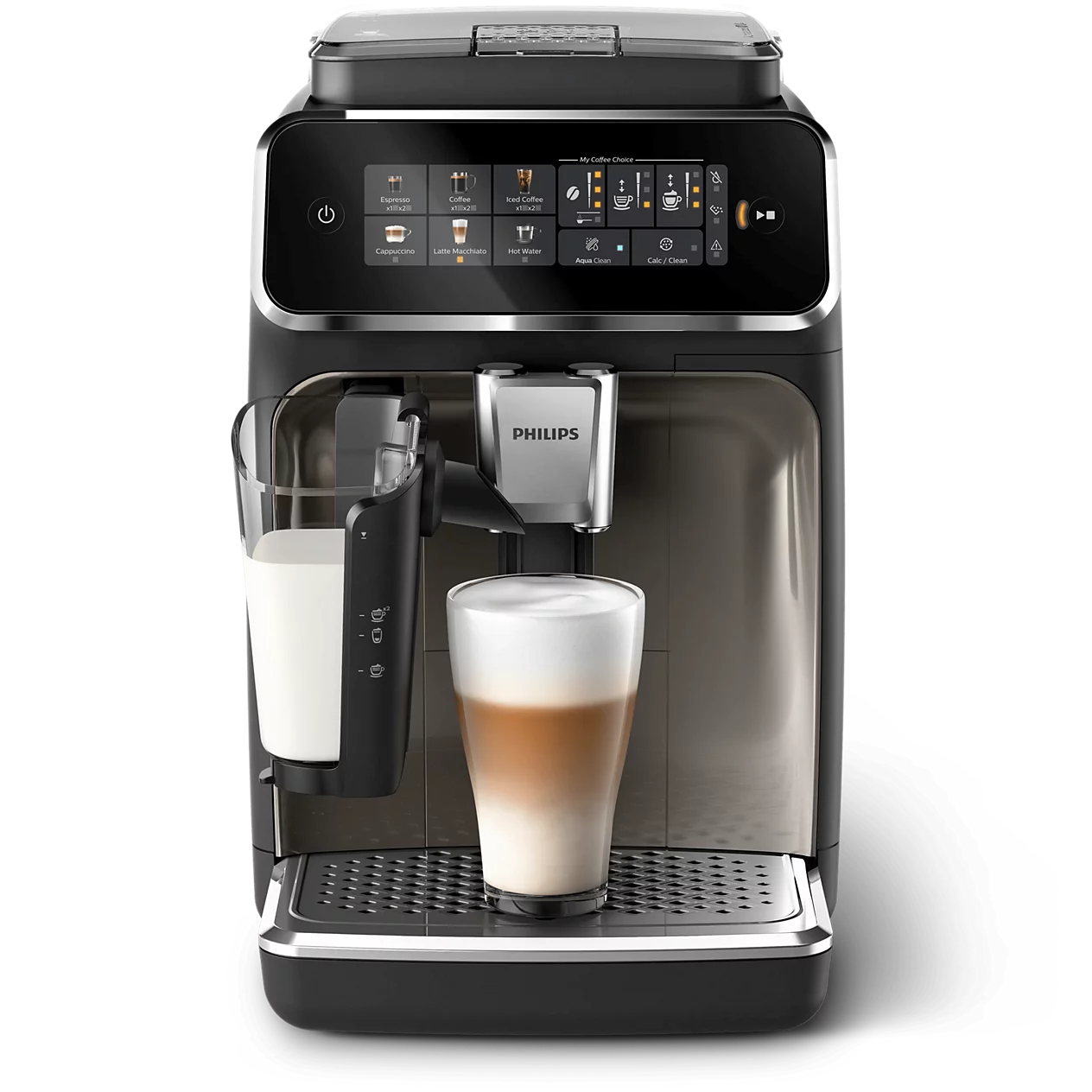
The Philips Series 3300 LatteGo (EP3347/90) is for users who care more about one-touch convenience than manual espresso technique. It grinds beans internally, prepares multiple coffee drinks, and uses the LatteGo milk system for automatic milk frothing with minimal hands-on setup.
- Fully automatic bean-to-cup operation
- 6 beverage options
- LatteGo automatic milk system
- Integrated grinder
- SilentBrew noise-reduction technology
- AquaClean-compatible filtration system
It is a strong fit for households that want espresso, cappuccino, and milk drinks with very little daily technique. The LatteGo system is also designed to simplify milk-system cleaning.
A super-automatic machine gives you less direct control over puck preparation, extraction, and steaming than a traditional semi-automatic espresso setup.
How We Chose the Best Espresso Machines
We compared machines based on the parts of espresso ownership that matter most in daily use: how much manual skill is required, whether a grinder is included, how dosing and tamping are handled, temperature and pressure control, milk frothing, machine size, cleanup, and the amount of control a user has over the final drink.
We also included multiple machine types because “best” means different things for different buyers. A beginner may benefit from guided grinding and automatic milk frothing, while an enthusiast may prefer a simpler machine that leaves more variables under manual control.
How to Choose an Espresso Machine
Choose the Machine Type First
Semi-automatic machines require the user to grind, dose, tamp, and control more of the process. Assisted semi-automatic machines automate some of those steps while keeping the portafilter workflow. Super-automatic machines grind, brew, and often froth milk with very little intervention.
Decide Whether You Need a Built-In Grinder
An integrated grinder reduces the number of separate appliances on your counter and can make setup easier. A separate grinder gives you more flexibility to upgrade independently and is often preferred by enthusiasts.
Consider Milk Frothing
Automatic milk systems are convenient for lattes and cappuccinos, while manual steam wands give you more control over texture and technique. If milk drinks are a daily priority, this feature can matter as much as espresso extraction itself.
Look at Portafilter Size and Workflow
Traditional machines often use 54mm or 58mm portafilters. Larger commercial formats are popular with enthusiasts, but portafilter size alone does not determine whether a machine will be easy or difficult to use.
Measure Your Counter Space
Espresso machines can be tall and deep, especially when they include bean hoppers, grinders, water tanks, or large steam systems. Measure both the countertop footprint and the vertical clearance under cabinets.
Think About Cleaning Before Buying
Espresso machines require regular cleaning of the portafilter, drip tray, steam wand, grinder area, and internal water system. Fully automatic machines may simplify the brewing workflow but often have more internal components that require scheduled maintenance.
Frequently Asked Questions
What is the best espresso machine for beginners?
Beginners often benefit from assisted machines that guide grinding, dosing, or milk frothing. Models such as the Ninja Luxe Café Premier and De’Longhi La Specialista Touch are designed to reduce guesswork while still allowing users to participate in the brewing process.
Do I need a separate grinder for an espresso machine?
Only if the machine does not include one. Compact machines such as the Breville Bambino Plus (BES500) and traditional models such as the Gaggia Classic Pro E24 require a separate espresso-capable grinder for fresh whole-bean coffee.
Is a semi-automatic machine better than a fully automatic machine?
Neither is universally better. Semi-automatic machines provide more direct control and a more hands-on workflow. Fully automatic machines prioritize speed and convenience by handling grinding, dosing, brewing, and sometimes milk preparation automatically.
How much should I spend on a home espresso machine?
The right budget depends on how much automation, grinder integration, temperature control, milk capability, and build quality you want. Remember that a machine without a built-in grinder also requires room in the budget for a capable espresso grinder.
Can an espresso machine also make regular coffee?
Some hybrid machines can. For example, the Ninja Luxe Café Premier Series (ES601) combines espresso, drip coffee, and cold brew functions. Traditional espresso machines are primarily designed for espresso-based drinks rather than full pots of drip coffee.
Final Thoughts
The best espresso machine is the one that matches how involved you want to be in the brewing process. The De’Longhi La Specialista Touch (EC9455M) offers a strong balance of guidance, customization, grinding, and milk automation. The Breville Bambino Plus (BES500) is a better fit for small kitchens, while the Gaggia Classic Pro E24 gives enthusiasts a more traditional espresso workflow.
If convenience is the priority, the Philips Series 3300 LatteGo (EP3347/90) moves much closer to a one-touch experience. Buyers who want guided espresso with built-in grinding but more hands-on involvement should also consider the Ninja Luxe Café Premier or Breville Barista Express Impress (BES876).