
A good coffee maker should fit the way you actually drink coffee. Some households want a straightforward machine that can brew a large pot before work. Others care more about precise temperature control, thermal carafes, compact dimensions, or the ability to brew smaller batches without sacrificing flavor.
This guide focuses on automatic drip coffee makers rather than espresso machines. We compare current models by brewing approach, capacity, convenience, programmability, carafe design, counter-space requirements, maintenance, and overall value for different types of home users.
Best Coffee Makers at a Glance
| Product | Best For | Capacity | Carafe | Standout Feature |
|---|---|---|---|---|
| Technivorm Moccamaster KBGV Select | Best Overall | 40 oz / 10 cups | Glass | Half- or full-carafe selector and simple operation |
| OXO Brew 8-Cup Coffee Maker | Best for Smaller Households | 8 cups | Thermal | Single-cup or full-carafe brewing |
| Ninja FreshBrew™ Coffee Maker (CE451) | Best for Large Households | 14 cups / 70 oz reservoir | Glass | Large capacity, Classic/Rich modes, small-batch setting |
| Cuisinart 14 Cup Programmable Coffee Maker (DCC-3200NAS) | Best Value for Everyday Brewing | 14 cups | Glass | 24-hour programmability and brew-strength control |
| Fellow Aiden Precision Coffee Maker | Best for Brewing Control | Single cup to full carafe | Thermal | Guided profiles with automated temperature, timing, and flow control |
| Ratio Six Coffee Machine | Best Premium One-Button Brewer | 40 oz / 8 cups | Thermal | Automated bloom-and-brew process with simple one-button operation |
Our Top Coffee Maker Picks
Technivorm Moccamaster KBGV Select
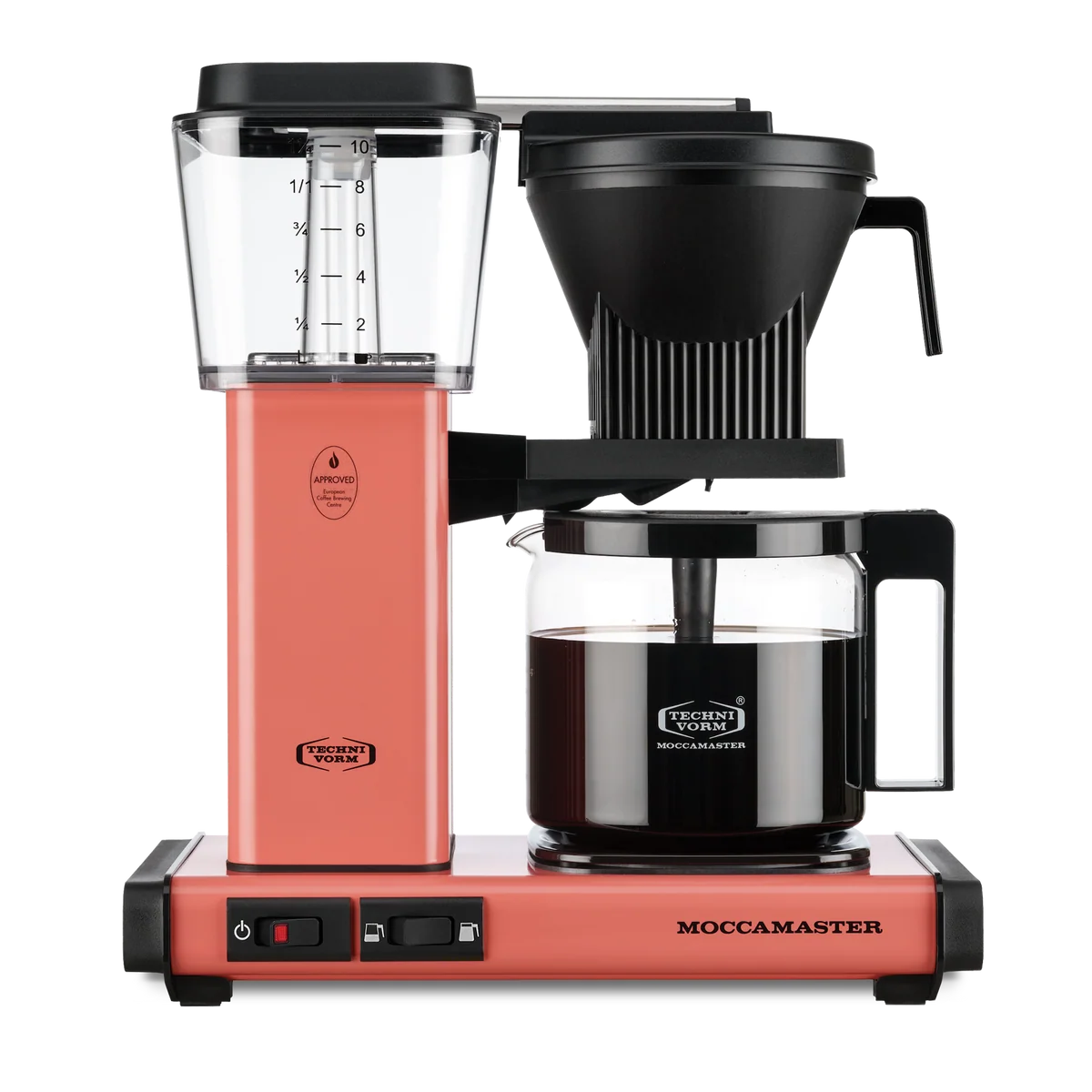
The Moccamaster KBGV Select is a premium automatic drip brewer built around simplicity rather than menus and app controls. It brews up to 40 ounces, uses a glass carafe and hotplate, and includes a selector for half- or full-carafe brewing.
- 40 oz / 1.25 L capacity
- Half- or full-carafe selector
- Automatic drip-stop brew basket
- 100-minute automatic power shutoff
- Relatively narrow 6.5-inch depth
It keeps daily operation simple while still focusing on controlled brewing and even water distribution. The 40-ounce capacity is useful for couples, families, and regular coffee drinkers who do not need an oversized carafe.
It is expensive compared with conventional programmable brewers, and it lacks conveniences such as scheduled brewing, a built-in grinder, or extensive digital controls.
OXO Brew 8-Cup Coffee Maker
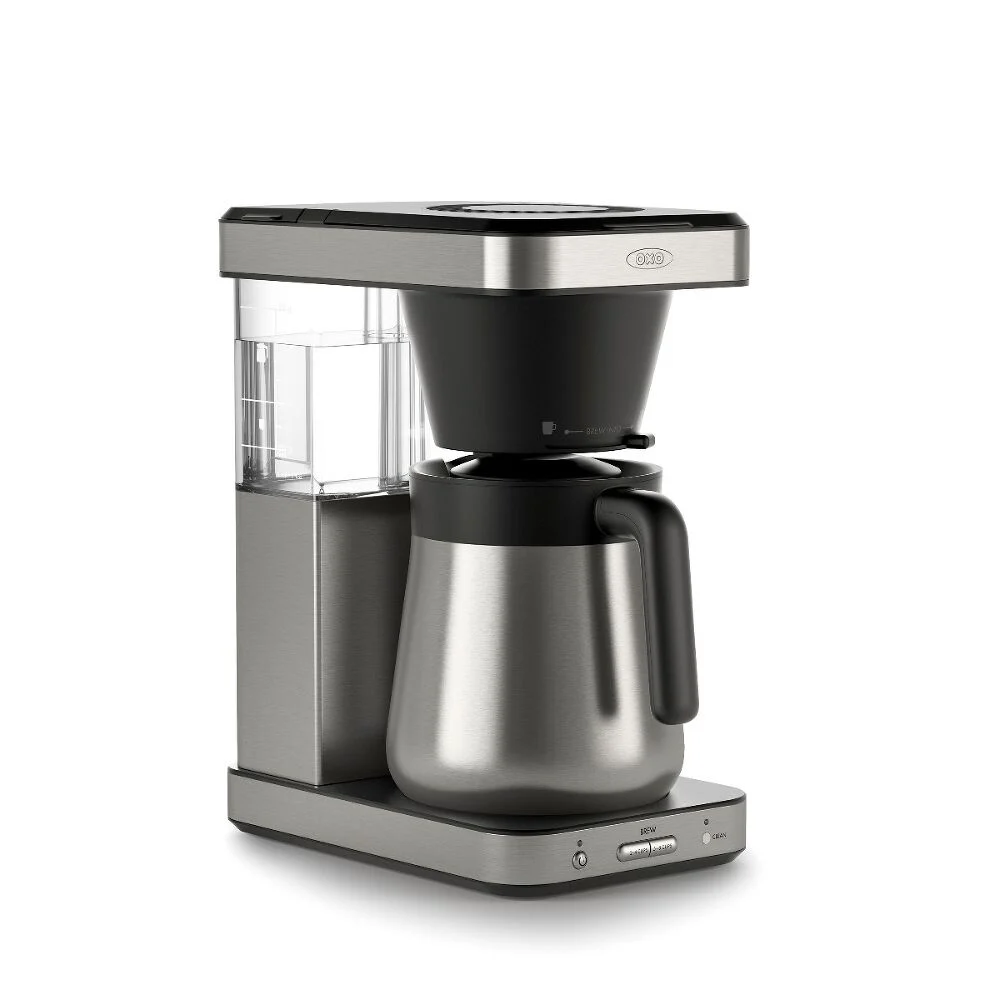
OXO’s 8-Cup brewer is especially useful for people who sometimes want a full carafe and sometimes want only one mug. Its BetterBrew system manages water temperature, volume, and brew cycles, while the thermal carafe keeps coffee warm without relying on a hotplate.
- 8-cup capacity
- Single-serve capability
- Double-wall vacuum-insulated thermal carafe
- Rainmaker showerhead and bloom cycle
- Dedicated cleaning mode
- Designed to fit under cabinets
The combination of single-mug flexibility and full-carafe brewing makes it well suited to one- or two-person households that still want the option to brew more coffee for guests.
Eight cups may be limiting for households that regularly serve many coffee drinkers, and buyers who prefer a warming plate may prefer a glass-carafe design.
Ninja FreshBrew™ Coffee Maker (CE451)
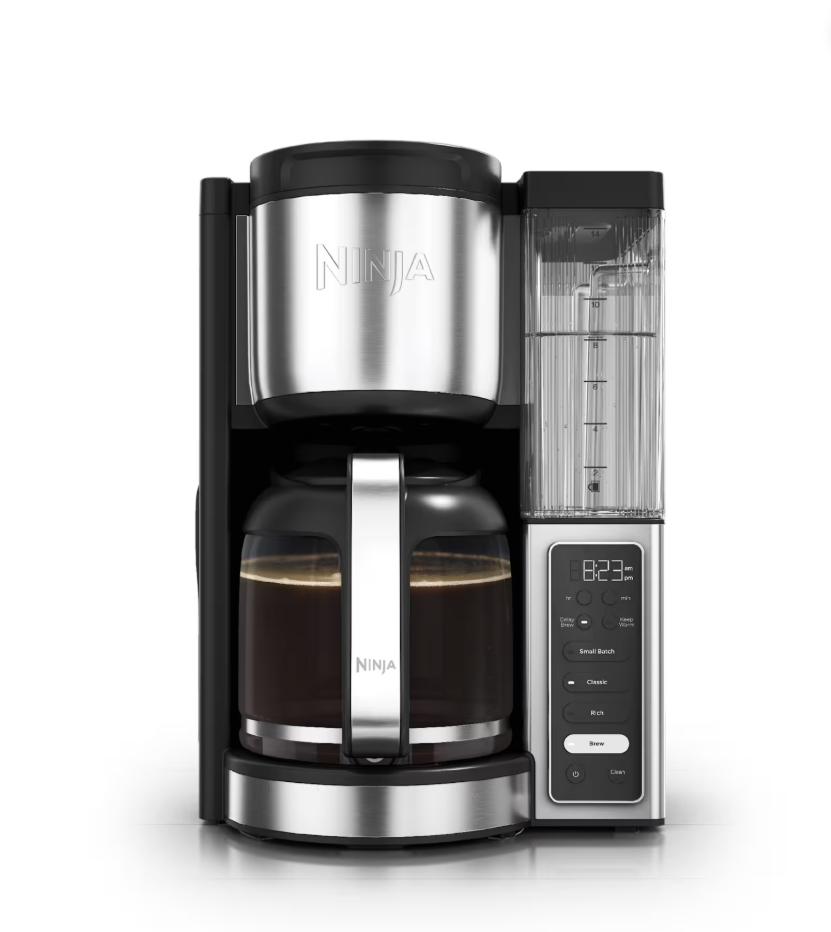
The Ninja FreshBrew™ CE451 is designed around capacity and convenience. It offers a 14-cup carafe, Classic and Rich brew styles, a small-batch setting, delayed brewing, a removable reservoir, and an adjustable warming plate.
- 14-cup glass carafe
- 70 oz removable water reservoir
- Classic and Rich brew styles
- 1–4 cup small-batch mode
- 24-hour programmable delay brew
- Variable warming plate with multiple temperature settings
It is a practical choice when one machine needs to handle both regular family use and larger weekend or entertaining batches.
The large carafe and reservoir require more counter space than compact brewers, and people who rarely brew more than a few cups may not need the extra capacity.
Cuisinart 14 Cup Programmable Coffee Maker (DCC-3200NAS)
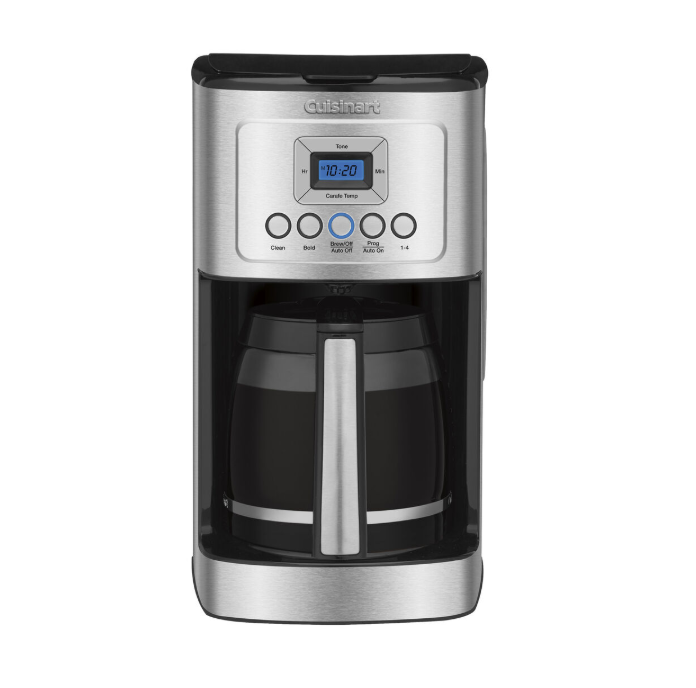
The Cuisinart DCC-3200 is a conventional programmable drip coffee maker with a large glass carafe and familiar controls. It offers Regular and Bold strength settings, 24-hour programmability, a 1–4 cup mode, automatic shutoff, and a self-clean function.
- 14-cup glass carafe
- Regular and Bold brew-strength control
- 24-hour programmable start
- 1–4 cup setting
- Adjustable auto-off
- Gold-tone filter and charcoal water filter
It covers the features most households actually use while remaining much more conventional and affordable than premium precision brewers.
It uses a glass carafe and warming plate rather than a thermal carafe, and it does not offer the degree of brew-profile customization found on more specialized machines.
Fellow Aiden Precision Coffee Maker
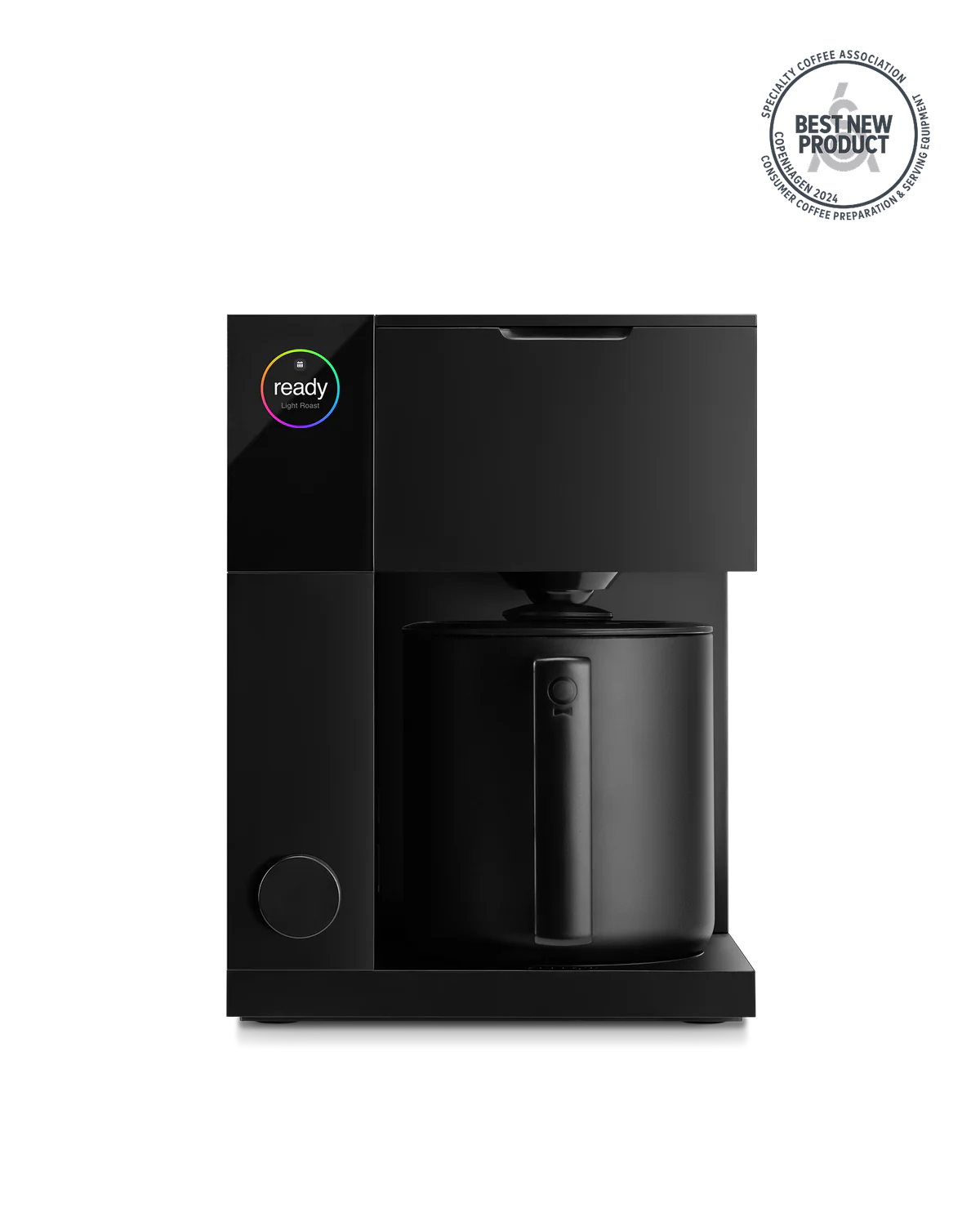
Fellow’s Aiden is aimed at coffee drinkers who want more control without manually managing every stage of a pour-over. The machine automatically controls temperature, timing, and water flow and can brew from a single cup through a full carafe.
- Single-cup to full-carafe brewing
- Automated temperature, timing, and water-flow control
- Built-in brewing guidance
- Customizable brew profiles
- Thermal-carafe design
- App-supported profile features
It gives enthusiasts more control over brewing variables while still providing an automated workflow for everyday use.
It is substantially more expensive than a standard programmable drip machine, and its advanced controls may be unnecessary for people who simply want to press one button each morning.
Ratio Six Coffee Machine
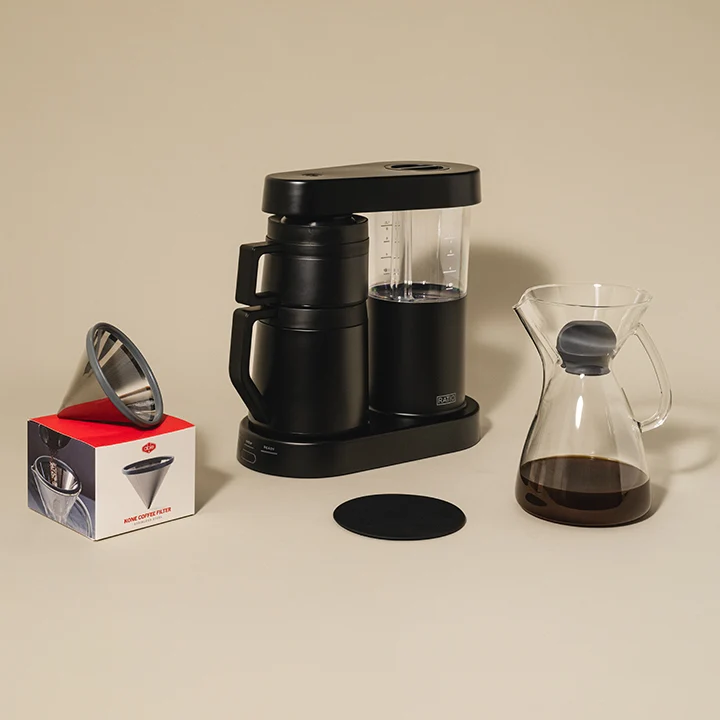
The Ratio Six takes a different approach to premium drip coffee: instead of adding more controls, it automates a bloom-and-brew sequence behind a one-button interface. The Ratio Six brews up to 40 ounces and includes a stainless-steel thermal carafe.
- 40 oz / 8-cup brewed capacity
- One-button operation
- Automated Bloom, Brew, and Ready phases
- Double-wall stainless-steel thermal carafe
- Formed stainless-steel body
- 5-year warranty
It is appealing for buyers who want premium materials and an automated pour-over-style process without learning a complicated control panel.
Its premium price is difficult to justify if programmability and maximum capacity matter more than materials, design, and simplified precision brewing.
How We Chose the Best Coffee Makers
We compared machines by the features that have the biggest effect on everyday ownership rather than simply counting functions. Important factors included useful brewing capacity, how well the machine handles small and large batches, carafe type, brewing controls, scheduling features, counter space, cleaning requirements, warranty coverage, and overall complexity.
We also separated automatic drip coffee makers from espresso machines. Espresso preparation involves a different brewing method, different maintenance requirements, and a different buying decision. If espresso is your priority, see our Best Espresso Machines guide.
How to Choose a Coffee Maker
Choose the Brewing Method First
For a household that mainly drinks standard brewed coffee, an automatic drip machine is usually the simplest starting point. If your goal is concentrated espresso, cappuccinos, or milk-based drinks, an espresso machine is a more appropriate category.
If you are still deciding between the two, read our Drip Coffee Maker vs Espresso Machine comparison.
Match Capacity to Your Real Routine
Large 14-cup brewers make sense for families, offices, and people who regularly serve several coffee drinkers. Smaller 8- to 10-cup machines are often easier to fit into a kitchen and may be more practical for one or two people.
See our Coffee Maker Size Guide for a more detailed look at capacity and counter-space planning.
Glass vs Thermal Carafe
Glass carafes are easy to see through and are commonly paired with warming plates. Thermal carafes retain heat through insulation and do not need a hotplate under the brewed coffee. Neither approach is automatically better; the right choice depends on whether you value visibility, simplicity, heat retention, or serving flexibility.
Decide How Much Programmability You Need
A basic brewer may only need an on/off control. A more convenience-focused household may benefit from a scheduled start, brew-strength adjustment, small-batch mode, or adjustable keep-warm settings. Enthusiasts may prefer machines that allow changes to temperature, bloom time, or water delivery.
Check Dimensions Before Buying
Measure counter depth, available width, and especially cabinet clearance. Some water reservoirs or brew baskets open upward, so the machine may need more vertical room during filling than its listed height suggests.
Plan for Cleaning and Descaling
Coffee oils, grounds, and mineral deposits build up over time. Removable reservoirs, accessible brew baskets, cleaning reminders, and dedicated cleaning cycles can make routine maintenance easier.
For maintenance instructions and general cleaning considerations, see How to Clean a Coffee Maker.
Frequently Asked Questions
What type of coffee maker is best for most homes?
An automatic drip coffee maker is usually the most practical choice for households that primarily drink regular brewed coffee. It can make multiple servings with minimal daily setup and is available across a wide range of prices and capacities.
Is a thermal carafe better than a glass carafe?
A thermal carafe is useful when you want brewed coffee to stay warm without sitting on a hotplate. A glass carafe can be easier to monitor and is common on programmable machines with warming plates. Your preferred serving style matters more than the material alone.
How many cups should my coffee maker hold?
Choose based on how much coffee your household normally brews at one time, not the largest batch you might occasionally need. Smaller machines are often more space-efficient, while 12- to 14-cup models are convenient for families and entertaining.
Do expensive coffee makers make better coffee?
A higher price can buy tighter control over brewing variables, better materials, thermal carafes, longer warranties, or additional customization. But a less expensive machine can still be the better choice if its capacity and convenience features fit your routine.
How often should a coffee maker be descaled?
Descaling frequency depends on the machine, water hardness, and usage. Follow the manufacturer’s cleaning guidance and any cleaning or descale indicator built into the brewer.
Final Thoughts
The best coffee maker is not simply the machine with the longest feature list. A better choice is the one that matches your normal batch size, preferred carafe, available counter space, desired level of automation, and willingness to maintain the machine.
For a straightforward premium brewer, the Moccamaster KBGV Select is a compelling all-around option. The OXO Brew 8-Cup is especially practical for smaller households, while the Ninja and Cuisinart 14-cup machines make more sense when capacity and programmability are priorities. Fellow Aiden and Ratio Six are better suited to buyers willing to pay more for precision brewing, materials, or a more specialized coffee experience.